
The Brave Face Is Costing You More Than You Know
Your management layer has quietly curated the picture you’re working from.
I was working with a manager recently who had been doing this work for fifteen years. There isn’t much that rattles her. We were midway through a data analysis exercise she’d run plenty of times before, and she just couldn’t get there. She stopped, looked at the screen, and I could see her trying to find something that wasn’t accessible to her.
Nothing about the task had changed. What had changed was the six months behind it. Her organization was mid-transformation, her team stretched thin, and she had been quietly carrying a question I’m hearing from more experienced leaders than I’d like:
“I don’t know if I’m being set up to fail.”
She wasn’t in a data problem. She was in a prolonged stress response. Her critical thinking had gone offline. And her executive had no idea.
This is not a fringe case. We have heard this directly from experienced leaders across multiple clients in diverse sectors.
Is the picture you’re working from actually accurate?
Here’s the thing about brave faces. They don’t just travel downward to the team. They travel upward - to you and your executive team. When feedback runs through people performing confidence they no longer have, decisions get made based on a picture that’s increasingly fictional. There’s a concept called the Johari Window. The relevant corner right now is the blind spot: what others can see about your situation that you cannot see yourself. It’s the Emperor’s New Clothes - not because anyone is being dishonest, but because the social contract makes honesty structurally expensive for the people closest to the work.
Your management layer has quietly curated the picture you’re working from. Most of the time, they don’t even realize they’re doing it.
What does it actually cost?
Personal capacity is finite. When managers spend it managing how they show up rather than on the work itself, the deficit shows up in execution.
“Surface acting depleted leaders’ energy not only on the day it happened, but into the next day - creating a spiral that led straight to burnout, lower performance, and a stronger desire to quit.” - Harvard Business Review, October 2025.
“70% of team engagement is attributable to the manager. When manager engagement drops, that signal moves downward through the entire organization.” - Gallup, State of the Global Workplace 2025.
Look at what the World Economic Forum’s Future of Jobs Report 2025 tells us employers need most from their workforce right now.
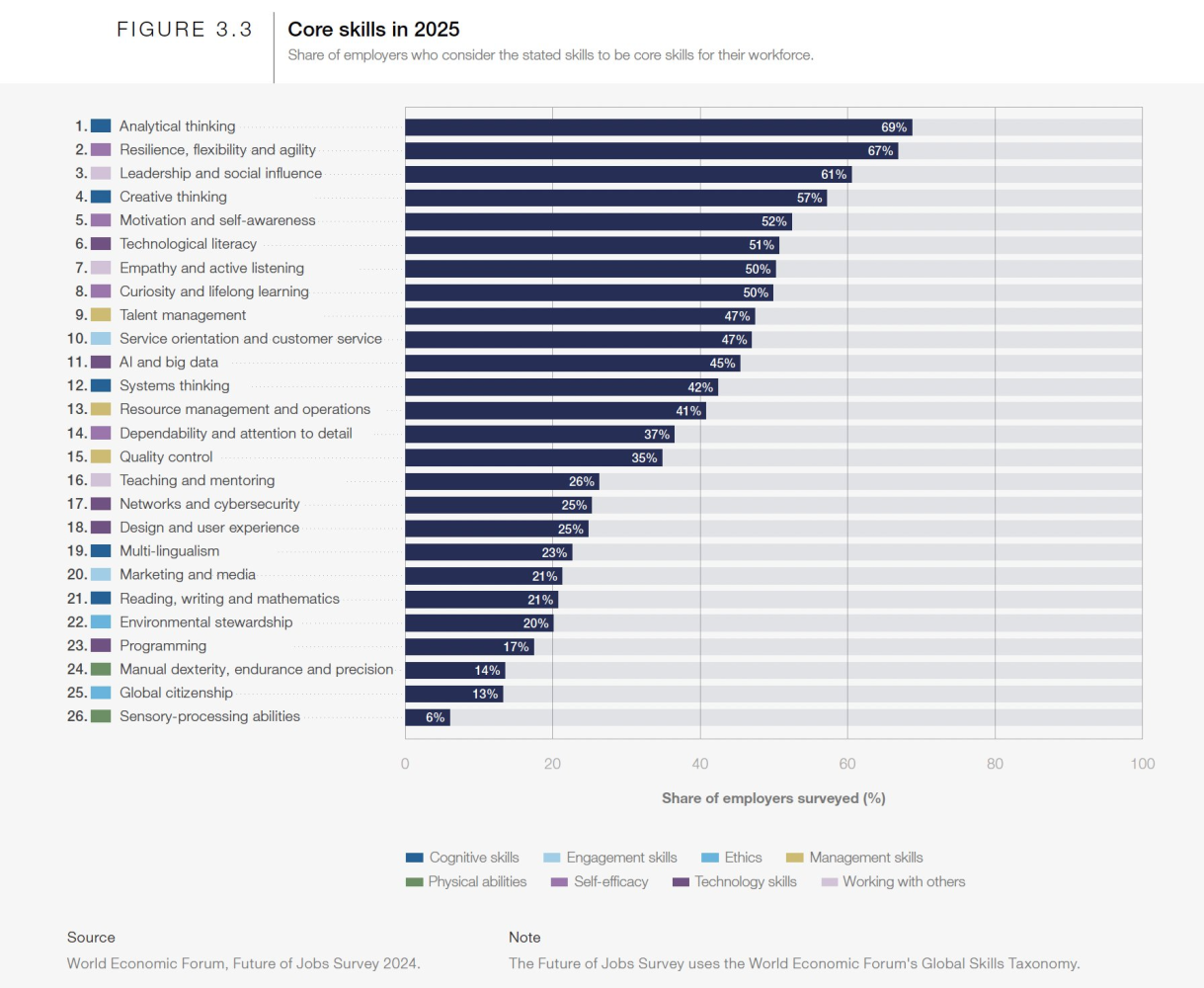
Figure 3.3: Core Skills in 2025 - World Economic Forum, Future of Jobs Report 2025
“Resilience, flexibility and agility is the #2 core skill employers need most - and the fastest rising in importance going into 2030.” - World Economic Forum, Future of Jobs Report 2025.
Analytical thinking. Resilience, flexibility and agility. Leadership and social influence. The top three skills on that chart are also precisely the capabilities a prolonged stress response systematically shuts down.
Why what you’ve been doing about it isn’t working
Most organizations have tried something. A wellness initiative. An EQ presentation. A resilience offsite. These are outside-in interventions attempting to address an inside-out problem. They don’t surface the hidden beliefs driving the gap between what leadership expects and what the team is carrying. And they assume spare capacity that doesn’t exist.
There is no spare capacity for training people out of a situation they are still in the middle of.
If you’re the manager in this pattern
Pause here for a moment. Not the executive reading about their management layer. You.
Think about how you walked into your last meeting. Whether you were fully present in it, or managing how you appeared in it. Think about how that might be landing with your team, even when you believe you’re holding it together well. That gap between presence and performance has a cost - and it travels downward.
Elite athletes don’t push through between plays. They control their breathing. Not because it’s calming - because it returns them to full capability before the next moment demands it. The same principle applies here.
Before your next meeting, take ninety seconds. Breathe slowly and fully - the kind of breath that reaches the bottom of your lungs. Three times. Notice what you’re carrying. Not to fix it, but to recognize it. Then bring yourself back into the room: present, not performing.
We call this a power pause. Research from George Mason University and Texas A&M found that short reappraisal practices measurably improve performance and reduce the reactive behaviors that compound stress in the people around you.
Awareness is step one. Breathing into full presence is step two. Neither requires a program. Both require a decision.
What do you do differently?
Do these 3 things, in order:
Ask a different question. “What is the hardest thing your team is carrying right now that I haven’t heard about?” It will feel uncomfortable the first time. That discomfort is information worth having.
Change how you work, not just how you talk about working. In our Flow Driven Leadership work with client teams, the shift that changes execution outcomes is structural, not motivational. When managers move from reactive performance to calm, focused presence, the energy that was going into managing appearances gets redirected into actually leading. Teams change - not because the workload changed, but because the person leading them is available again.
Get an honest read on what you’re actually working with. Most organizations cannot accurately assess how depleted their management layer is from inside the system. The signal has been filtered for too long. You cannot change what you cannot see.
What would it mean for your most critical initiatives - and for the people leading them - if the energy currently spent on holding it together got redirected into achieving outcomes everyone could actually be proud of?